1. What changes when alkyds are urethane-modified
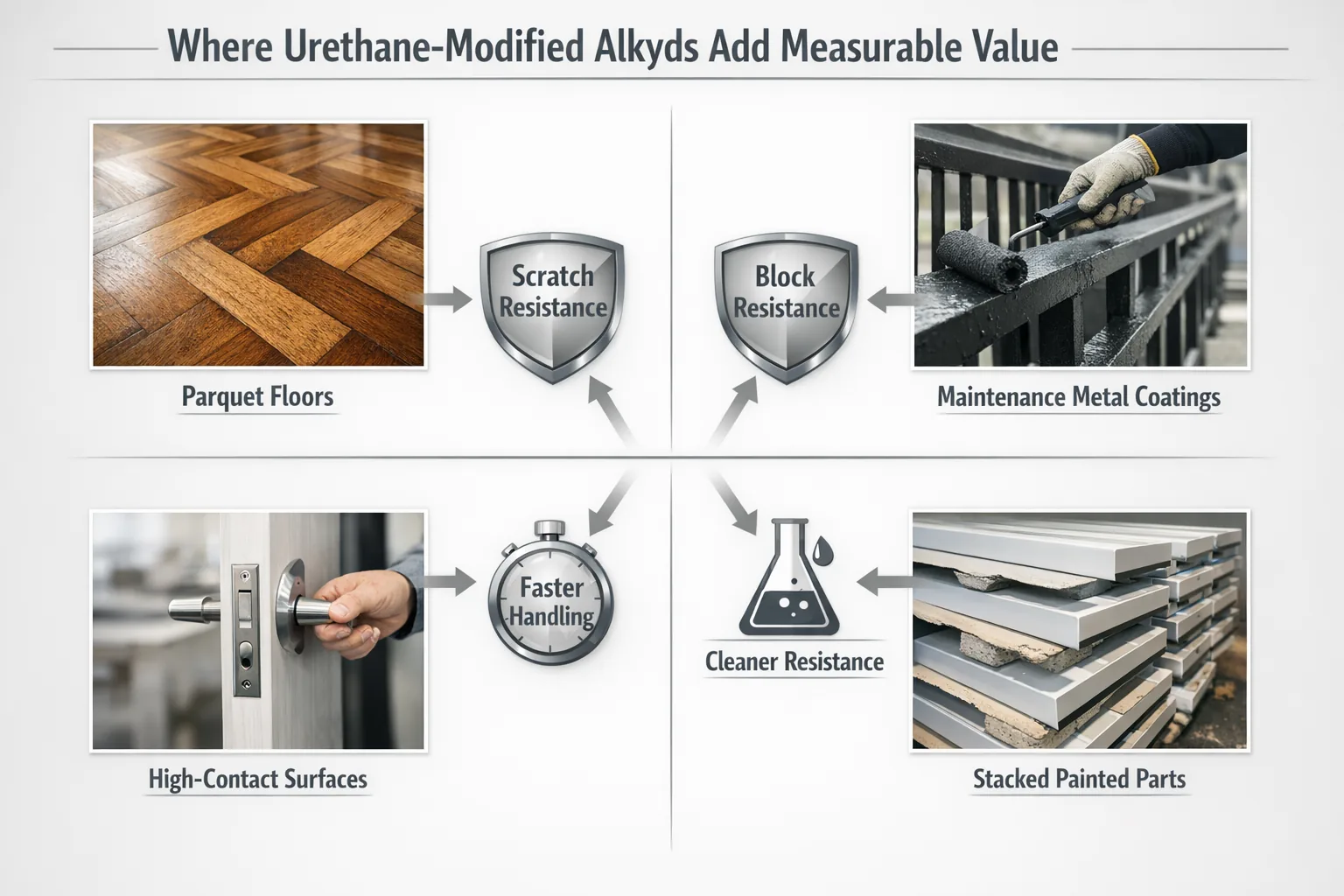
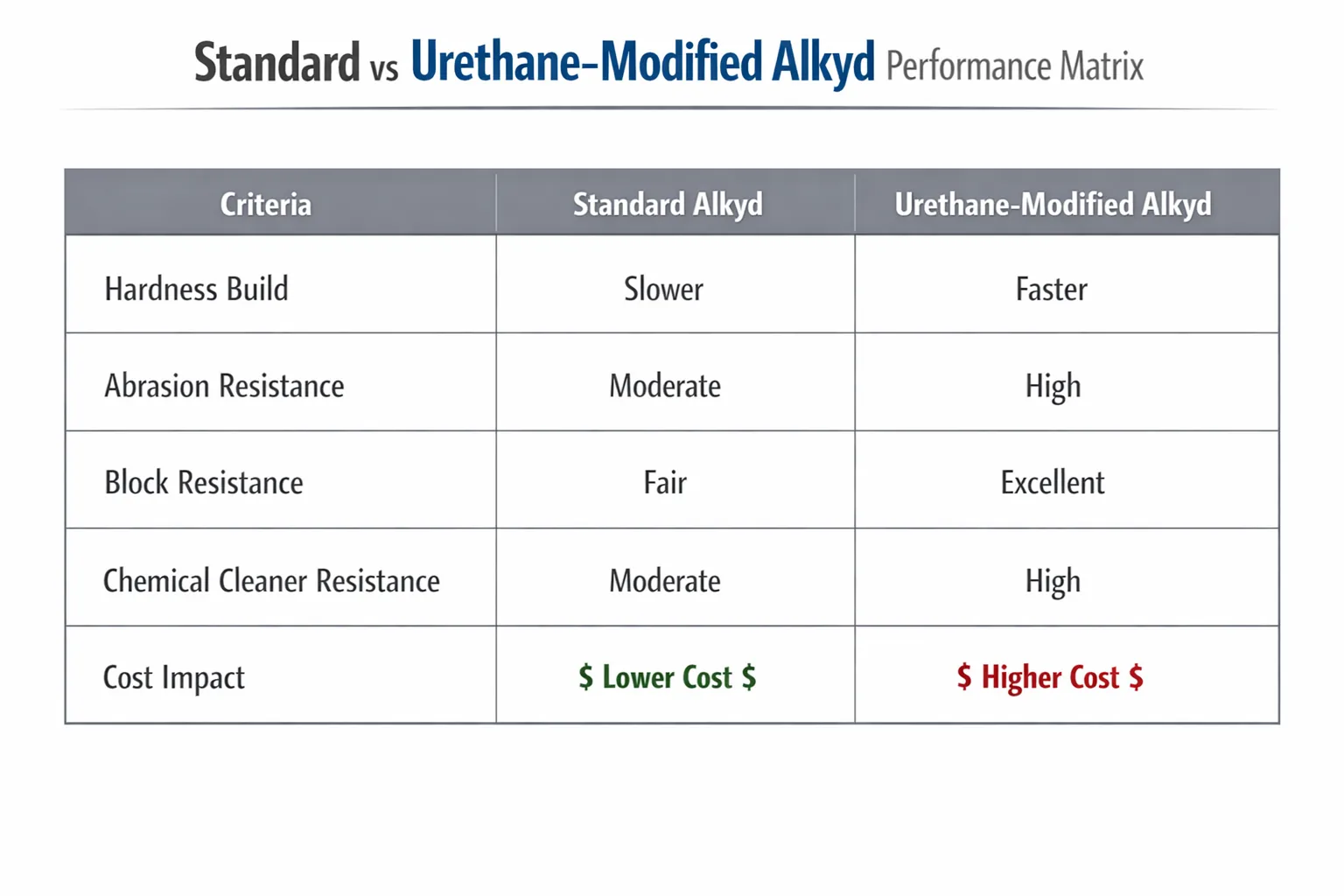
Compared with standard alkyds, urethane-modified alkyds generally provide:
- Higher hardness at comparable cure windows
- Better abrasion and mar resistance
- Better block resistance and handling strength
- Better resistance to some chemicals and cleaners
These gains come with higher formulation cost and sometimes tighter processing windows.
2. Where standard alkyds are still the right choice
Standard alkyd systems remain appropriate when:
- Service exposure is moderate
- Cost sensitivity is high
- Application simplicity is a priority
- Existing performance is already acceptable
For many decorative and general maintenance coatings, standard alkyds can meet target performance without added complexity.
3. When urethane-modified alkyds are worth the premium
Use urethane-modified alkyds when the system needs:
- Higher early hardness and faster return to service
- Better resistance to blocking in stacked parts
- Better abrasion resistance in high-contact areas
- Better cleaner or light chemical resistance
Typical examples include parquet coatings, industrial maintenance topcoats, and higher-duty enamel systems.
4. Process and formulation implications to evaluate
Switching to urethane-modified alkyds may affect:
- Viscosity profile and solvent demand
- Drier package response
- Recoat behavior and cure schedule
- Pigment wetting balance
Before full conversion, run pilot panels and verify flow, dry, hardness build, and intercoat adhesion under actual production conditions.
5. Performance-cost decision framework
A practical decision path:
- Define must-have properties from service exposure
- Benchmark current standard alkyd performance
- Identify specific failure modes (block, abrasion, cleaner attack)
- Compare modified vs standard on controlled test panels
- Approve upgrade only where measurable value is clear
This avoids over-engineered formulations and protects margin.
Final takeaway
Choosing between standard and urethane-modified alkyds is a performance economics decision. Standard alkyds remain effective for many systems, while urethane-modified grades are best reserved for clear resistance and durability gaps that testing confirms.
View Alkyd Resin Portfolio Ask for Grade Comparison
FAQ: Standard vs Urethane-Modified Alkyds
Are urethane-modified alkyds always better than standard alkyds?
No. They are better for specific resistance and durability requirements, but standard alkyds are often sufficient and more cost-effective for moderate service.
What properties improve most with urethane modification?
Hardness build, block resistance, abrasion resistance, and some cleaner/chemical resistance are the most common improvements.
Can I replace standard alkyd with urethane-modified grade directly?
Not always. Solvent balance, drier response, and viscosity behavior may change, so pilot validation is required before full conversion.
When should I avoid upgrading to urethane-modified alkyds?
Avoid upgrading when current performance already meets requirements and the improvement does not justify additional raw-material and process cost.
What tests should decide the final choice?
Use side-by-side tests for hardness build, abrasion, block resistance, adhesion, and relevant cleaner or chemical contact under real cure conditions.