1. Start with wood substrate and service conditions
Before selecting resin grade, define:
- Wood type and porosity (softwood vs hardwood)
- Interior or exterior exposure
- UV, moisture, and temperature cycling risk
- Desired visual effect: natural look, satin, or high gloss
If this is unclear, formulation decisions become inconsistent and performance claims are hard to reproduce.
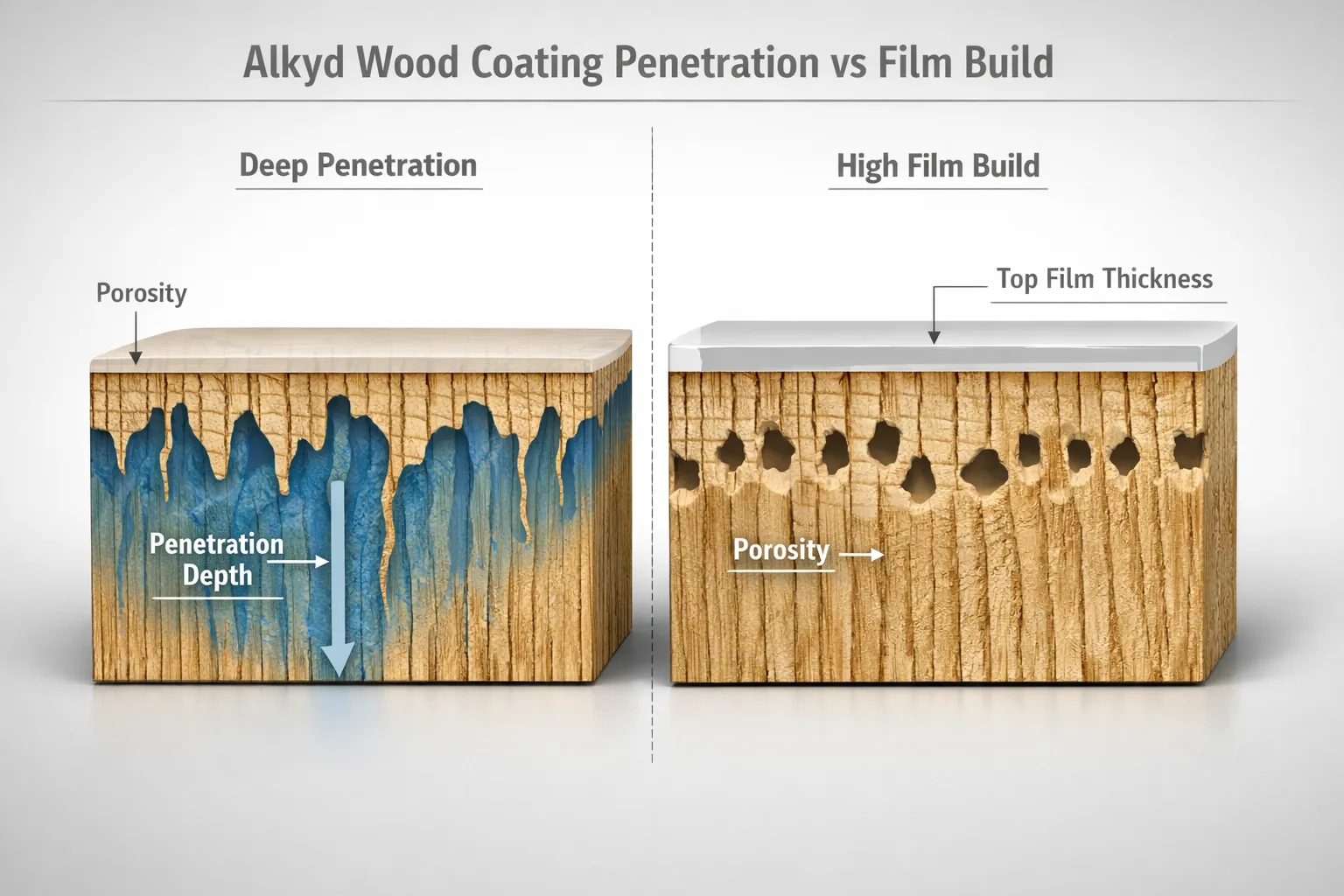
2. Penetration vs film build: the first technical trade-off
Wood protection needs both internal stabilization and surface barrier performance.
- Higher penetration improves adhesion and moisture movement tolerance
- Higher film build improves gloss holdout and stain resistance
- Over-penetrating systems can reduce film body and gloss depth
- Over-film systems can crack when wood swells and shrinks
The right resin lets you control this balance instead of forcing heavy correction with additives.
3. Select oil length by movement tolerance and handling speed
Long oil alkyds
- Better wetting and penetration
- Better flexibility on moving wood
- Slower dry and lower early hardness
Medium oil alkyds
- Balanced penetration and film build
- Better dry speed for production turnover
- Practical for most furniture and joinery systems
Short oil alkyds
- Harder films but limited ambient cure suitability
- Usually not preferred for conventional air-dry wood coatings
4. Gloss performance comes from flow, cure, and substrate prep
Gloss is not only a resin property. It depends on:
- Surface leveling before set
- Solvent evaporation profile
- Drier package tuning
- Sanding and sealing quality of wood
A resin with strong leveling but slow cure may still fail production targets. A resin with fast cure but poor flow may produce lower DOI and visible texture.
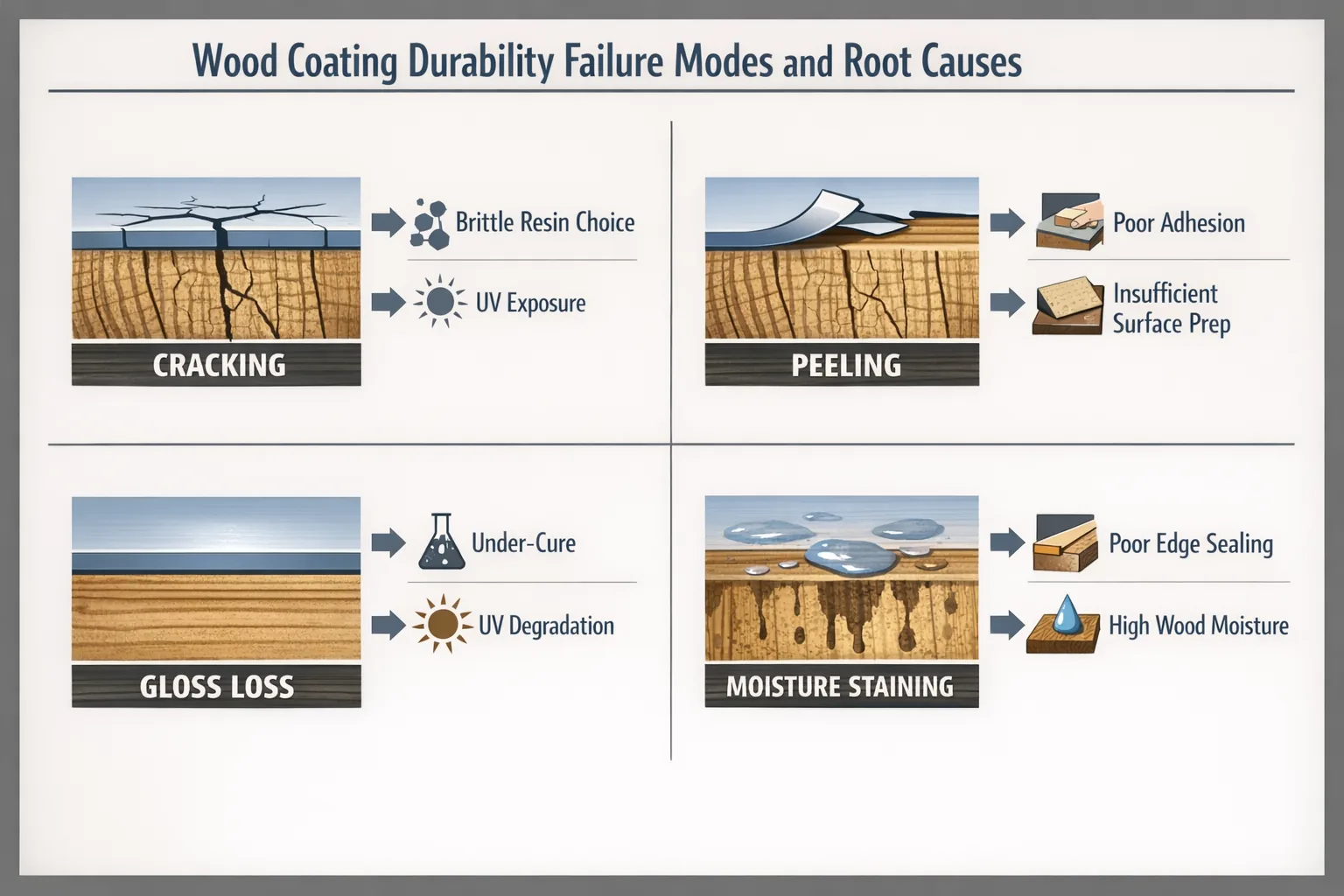
5. Durability in wood service: what actually controls it
In wood coatings, durability is driven by system behavior across primer, sealer, and topcoat.
Key failure drivers:
- Brittle film on moving substrate
- Incomplete cure in thick or cool applications
- Moisture ingress through weak edge sealing
- UV degradation in exterior exposure
Durability improves when resin flexibility, cure profile, and film build are tuned as one package.
6. Practical selection checklist for wood alkyds
- Confirm substrate porosity and movement profile
- Match oil length to flexibility and cure environment
- Validate penetration and film build on real wood panels
- Tune drier package for climate and film thickness
- Test gloss retention, print resistance, and moisture cycling
This process reduces costly rework and improves field consistency.
Final takeaway
For wood coatings, the best alkyd is not the hardest or fastest grade. It is the grade that provides stable penetration, reliable gloss development, and sufficient flexibility over service life. Medium and long oil systems cover most practical wood applications when paired with correct drier and solvent design.
Explore Alkyd Resin Families Request Wood Coating Guidance
FAQ: Alkyd Selection for Wood Coatings
Which alkyd type is most common for wood coatings?
Medium and long oil alkyds are most common because they provide better flexibility and wetting for wood movement while still enabling practical film build.
Why is penetration important in wood coatings?
Penetration improves anchorage and helps the coating tolerate substrate movement, reducing early peeling or cracking risk.
Can I use short oil alkyds for air-dry wood finishes?
They are generally less forgiving in ambient cure wood applications and can under-cure or become too brittle unless process control is very tight.
How do I improve gloss without sacrificing durability?
Balance resin flow and cure speed, control substrate sanding/sealing, and avoid over-hard systems that lose flexibility on moving wood.
What tests should I run before scale-up?
Run adhesion, gloss retention, print resistance, moisture cycling, and crack resistance tests on representative wood panels and film thicknesses.